
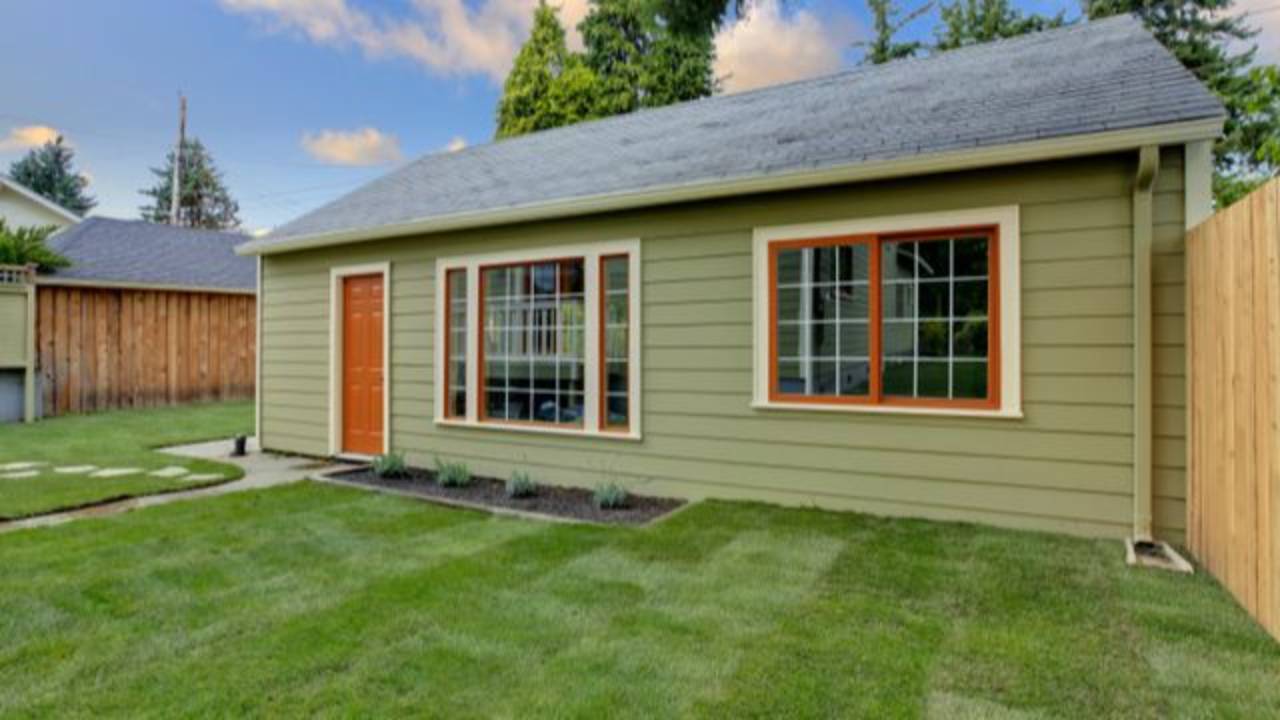
Backyard homes? Yes, in my backyard
Sep 30, 2026Marketwise column for the Bay Area News Group and its flagships, The Mercury News and East Bay Times
Published: December 25
Titled: Older home sellers can send the home flippers away while reaping the rewards
By Pat Kapowich
“Not in my backyard” has been replaced with “yes in my backyard.”
Twenty years ago, most Bay Area homeowners were opposed to having secondary housing units in their next-door neighbor’s backyard. Similarly, Accessory Dwelling Units (ADUs) have replaced “granny units” and “in-law quarters.”
Times change. Perhaps the housing shortage and aging population have shifted attitudes. Regardless, according to the California Department of Housing and Community Development, “changes to ADU laws (SB 1069, AB 2299 and AB 2406) will further reduce barriers, better streamline approval and expand capacity to accommodate the development of ADUs.”
The term “housing crisis” is now synonymous with the housing shortage. Young, old, rich or poor have all seen Bay Area rents skyrocket as supply plummets. The new laws deliberately eased parking and other requirements, which will no doubt add housing stock for renters and rental-income ADU owners.
As a Realtor, I know this is another option for many older adults who are traditionally unable or unwilling to sell and move. In fact, our Multiple Listing Service will include a search function for properties with an ADU.
Accessory Dwelling Units — aka Secondary Dwelling Units or Accessory Living Units — are attached or detached new construction. Conversely, a Junior Accessory Dwelling Unit (JADU), repurposes a room within the existing footprint of the single-family residence.
JADUs have a separate entrance but no gas or 220-volt appliances and can be no more than 500 square feet. Two double locking doors are required to connect the unit to the primary residence. The JADU requires an efficient kitchen, while a bathroom is optional.
Senior citizens, now referred to as “older adults,” can maximize the newer term “aging in place.” The ADU can accommodate guests, renters, family members or caregivers. Lest we forget, the homeowner can live in the ADU while collecting rent on the larger home.

How much do they cost? One newspaper article stated, “a rock-bottom new one can cost $50,000 to construct.” We’re not talking sheds.
Another reported $200,000 on the high end to complete. Reports also indicate that speeding up the process can dramatically reduce fees and costs. After interviews with the Garrison brothers of MC Contractors & Engineering, I thought it would be prudent to get real-world advice.
Owner Mark Garrison currently has 20 permits open at different building departments from San Francisco to Gilroy. They also recently built a detached ADU in Los Gatos for $335,000. The permits were over 15 percent of the cost.

Garrison confirmed a few of my concerns. Adding an ADU could trigger upgrades to the existing home’s old, undersized water, gas, and sewer lines.
“One can easily spend $75,000 in utility upgrades,” he said. Utility companies bring their respective lines from the street to the single-family home. The contractor will then bring those lines to the ADU. Garrison recalled an attached, non-permitted ADU that triggered the need to add fire sprinklers to both dwellings.
The cost could reach $30,000 in plumbing, labor, fees, and permits. Fire sprinklers aren't mandated in ADUs if the existing house didn't require them when it was built. However, building and fire departments might find a loophole.
Mark’s brother, Tim, author of “Structural Concepts for the Non-Engineer,” shared how many professionals you can hire to build an ADU.
“The primary disciplines typically required are an architect, surveyor, civil engineer, planner, structural engineer, and builder. Secondary disciplines may also be involved, such as a landscape architect or interior designer. Trade contractors usually handle disciplines such as electrical engineering and mechanical engineering.
“If this site is steeply sloping, seismically active or has some other geological issue, you’ll likely need a geotechnical engineer,” Tim added. “If everything goes perfectly, six months minimum. If there are glitches — there’s no upper limit. Realistically I’d estimate a year.”
No matter — the “win-win” investment and security of an ADU or JADU may well be worth the cost and wait.
Realtor Pat Kapowich provides old-fashioned service within a high-tech world. He writes the MarketWise column for the San Jose Mercury News and Bay Area News New Group. He can be reached at 408-245-7700 or Pat@SiliconValleyBroker.com. SiliconValleyBroker.com.
